
03 March 2025
Glossario Risografista
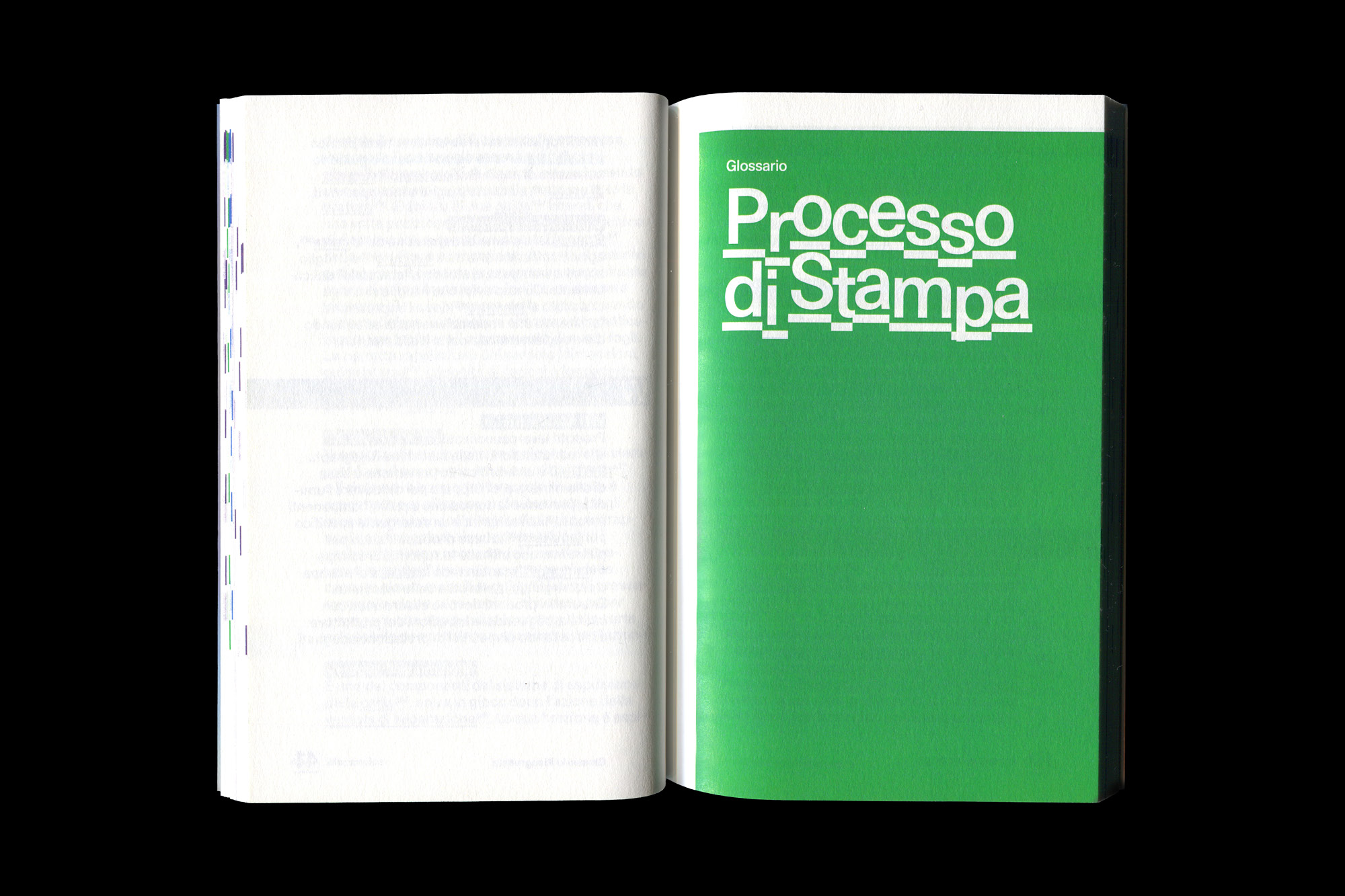
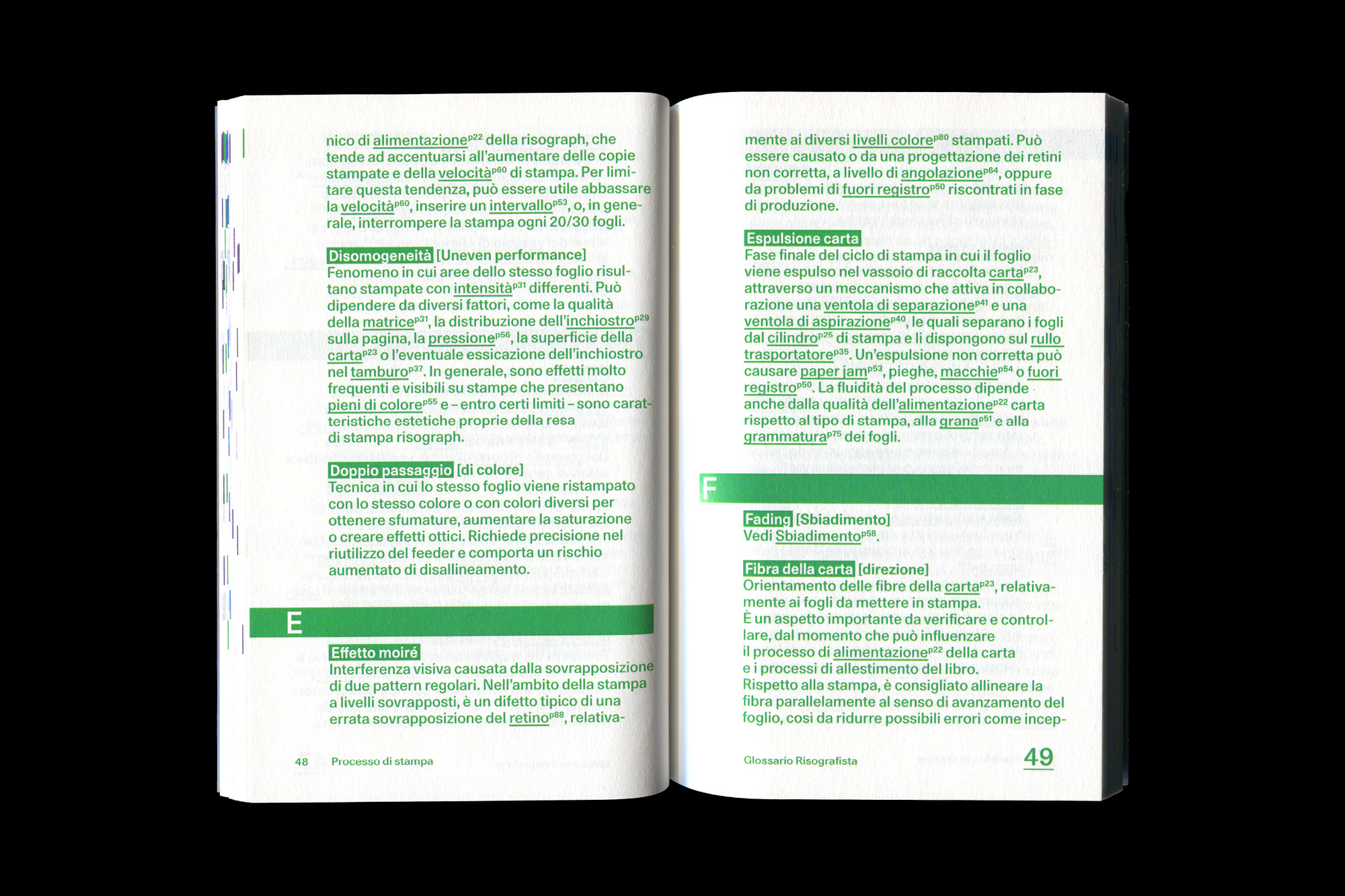
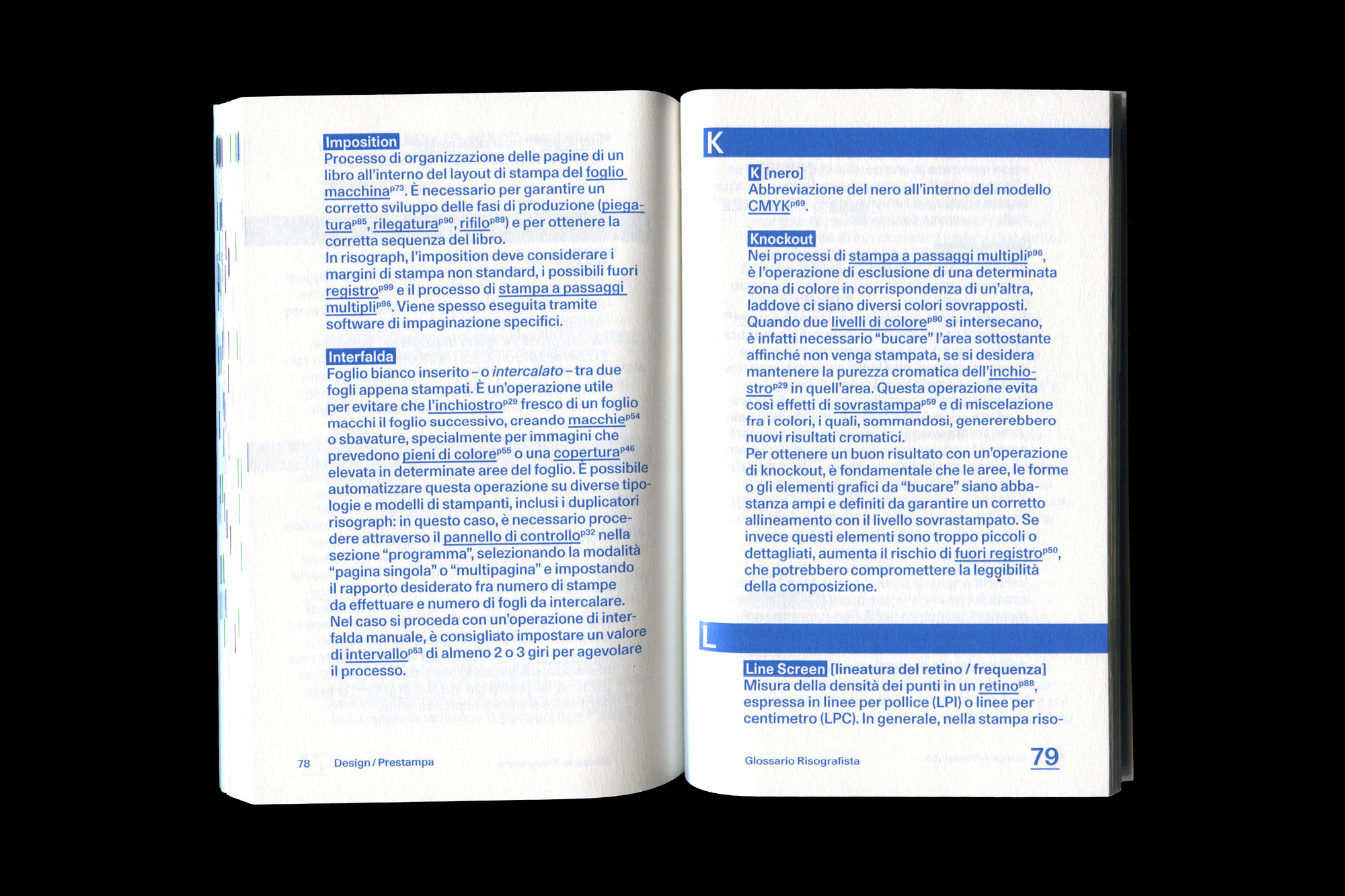
The edition is the result of a research project on the risograph printing technique — an investigation that explores both its mechanical and technical aspects, as well as the elements of design, prepress, and production that define its language. The glossary gathers the main concepts related to this universe, presenting them as a heterogeneous and layered collection of terms, processes, mistakes, tools, colors, and rules that make up the risograph world.
- size100×150 mm
- pages100
- printrisograph 4 colours
- Colourspurple, green, Blue, Black
- paperArena natural rough 100g
- binding perfect binding
- copies150
- languageita
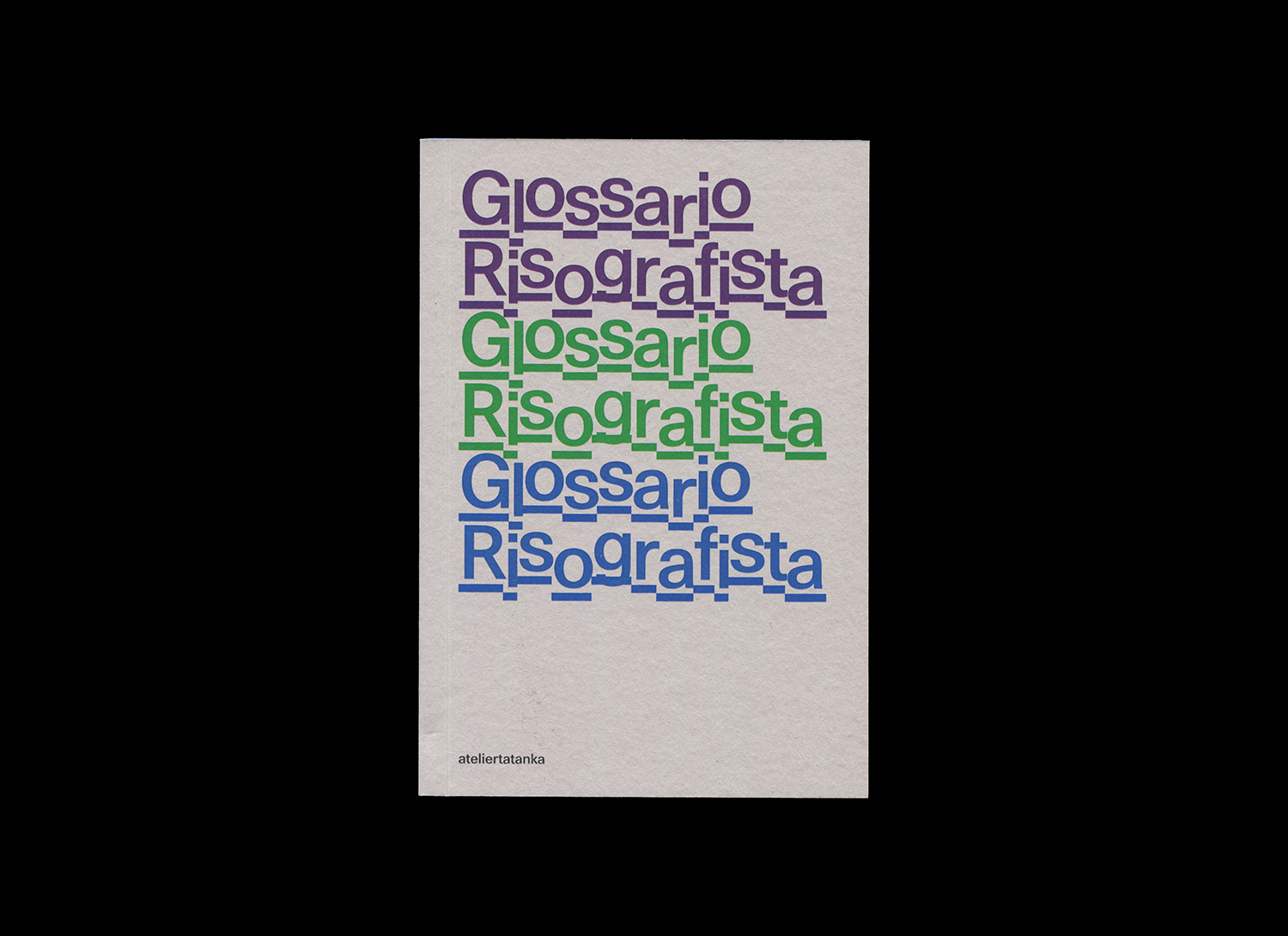
The collection is organized on several levels of exploration, offering independent layers of reading that remain in constant dialogue with one another. The three sections of the book function as parallel glossaries: three vertical axes that cross the same macro-process from different perspectives.
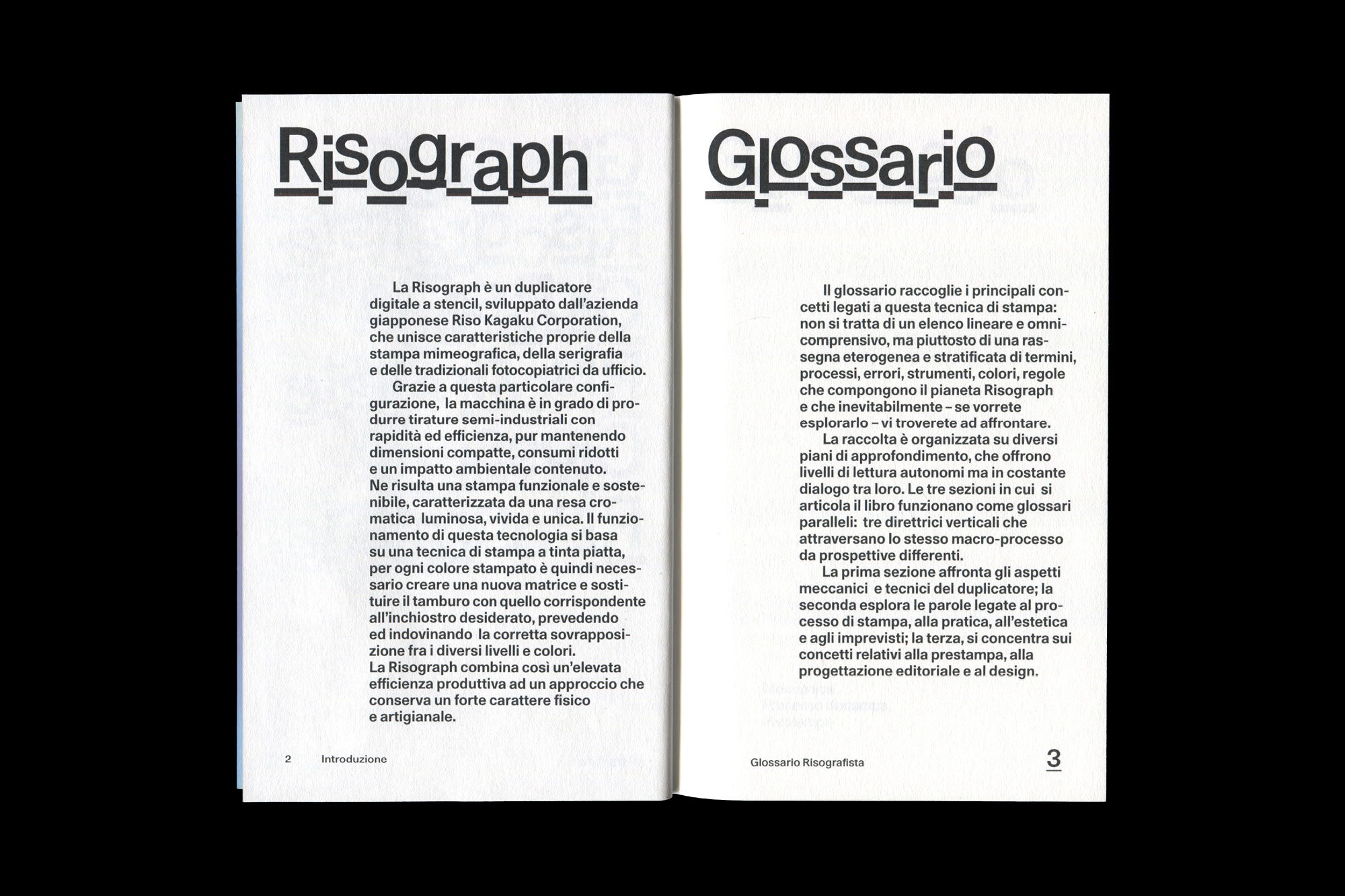
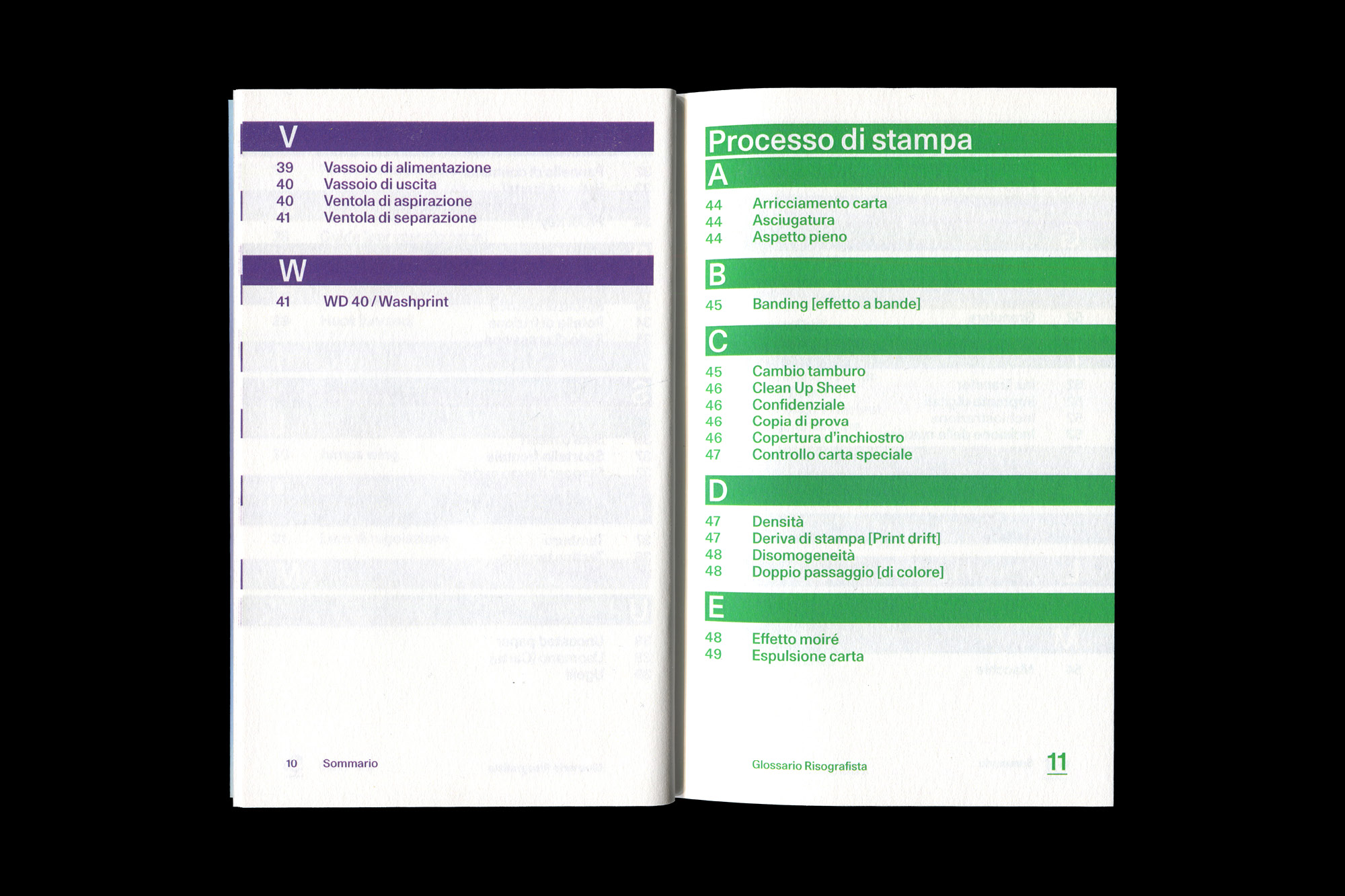
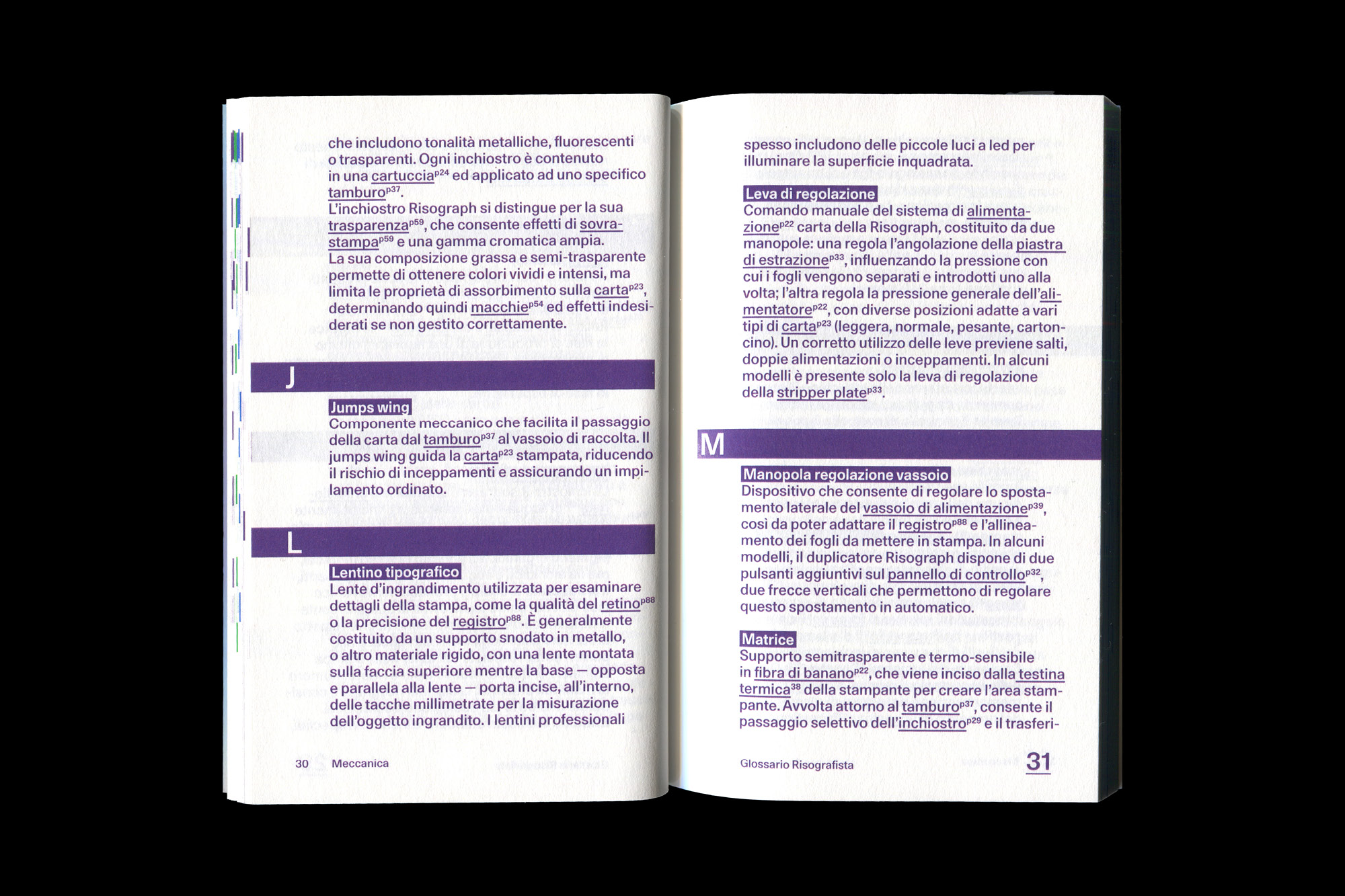
The first section deals with the mechanics and components of the duplicator; the second explores the words connected to the printing process, practice, aesthetics, and accidents; finally, the third focuses on concepts related to prepress, editorial design, and graphic design.
Glossario Risografista is available in both print and digital editions.
The digital version of the publication can be downloaded for free at the following link.
Riso Talks
- eventbook presentation
- curated byatelier tatanka
- wherevia dei carrettieri 21/a, bologna
- whenmarch 7, 2025
- statuscompleted
The editorial project Glossario Risografista was presented for the first time on the occasion of Riso Talks, an event hosted at the space of Atelier Tatanka in Bologna.
Riso Talks is a moment of encounter and exchange dedicated to printing and research in the field of risograph. The event, structured in two sessions, presented the main outcomes of the research project carried out by Atelier Tatanka over the past year — including insights into the printing technique, image processing, color separation, and language — alongside the launch of the latest publications and tools developed as part of the same project.
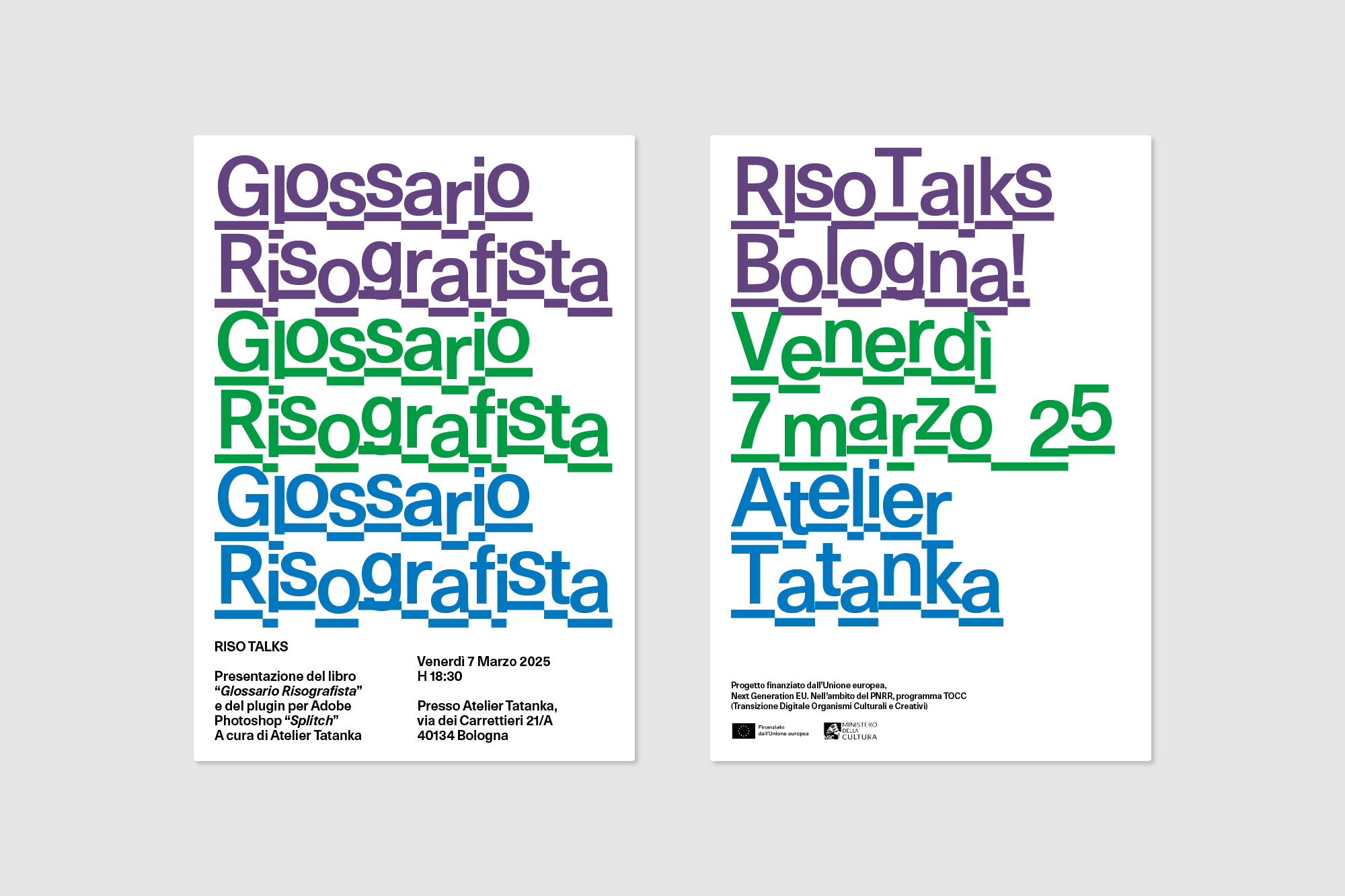

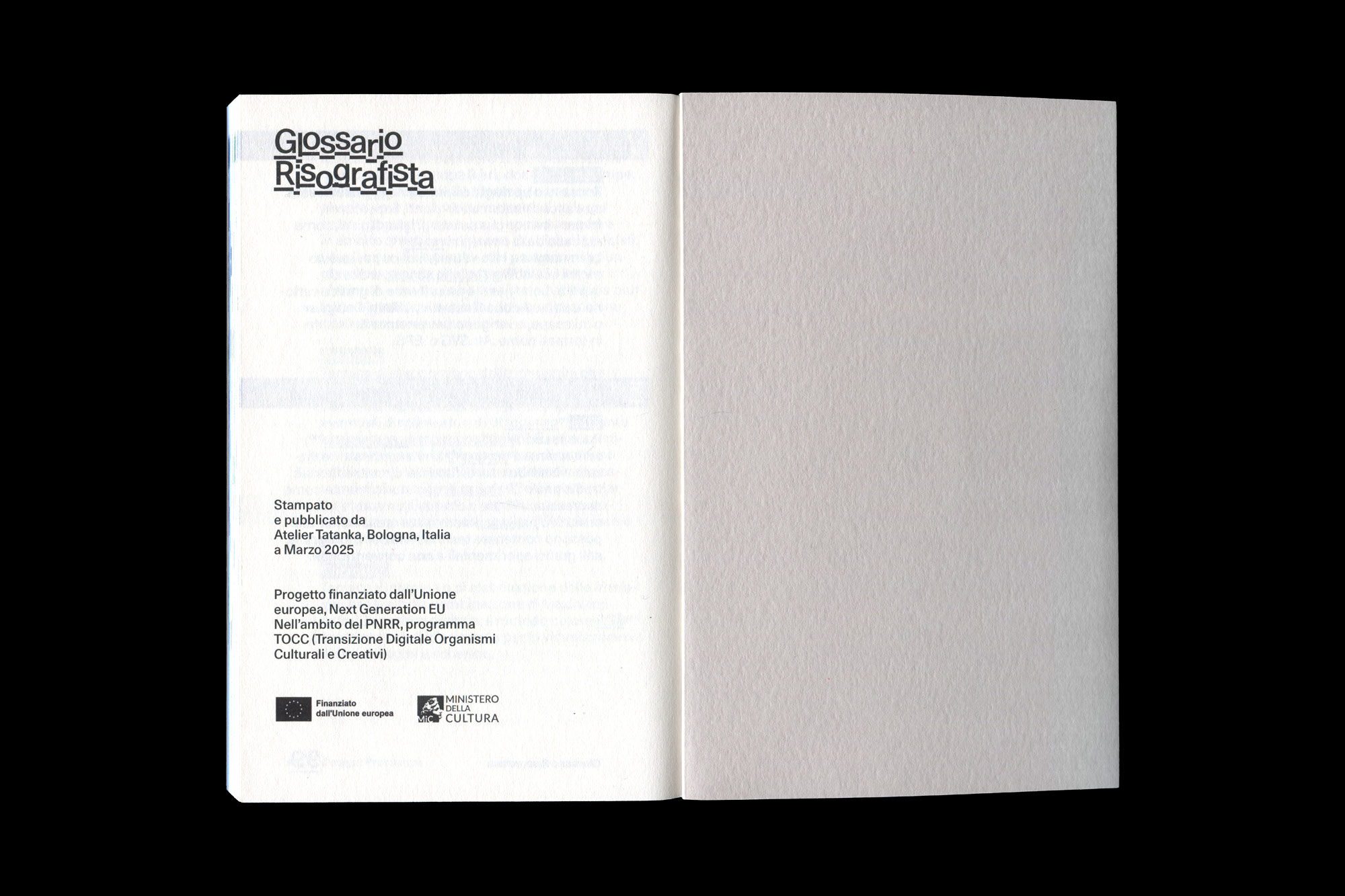
The project was funded by the European Union, Next Generation EU, as part of the PNRR, TOCC (Transizione Digitale Organismi Culturali e Creativi).
An error has occurred