
10 April 2025
Stampa Risograph
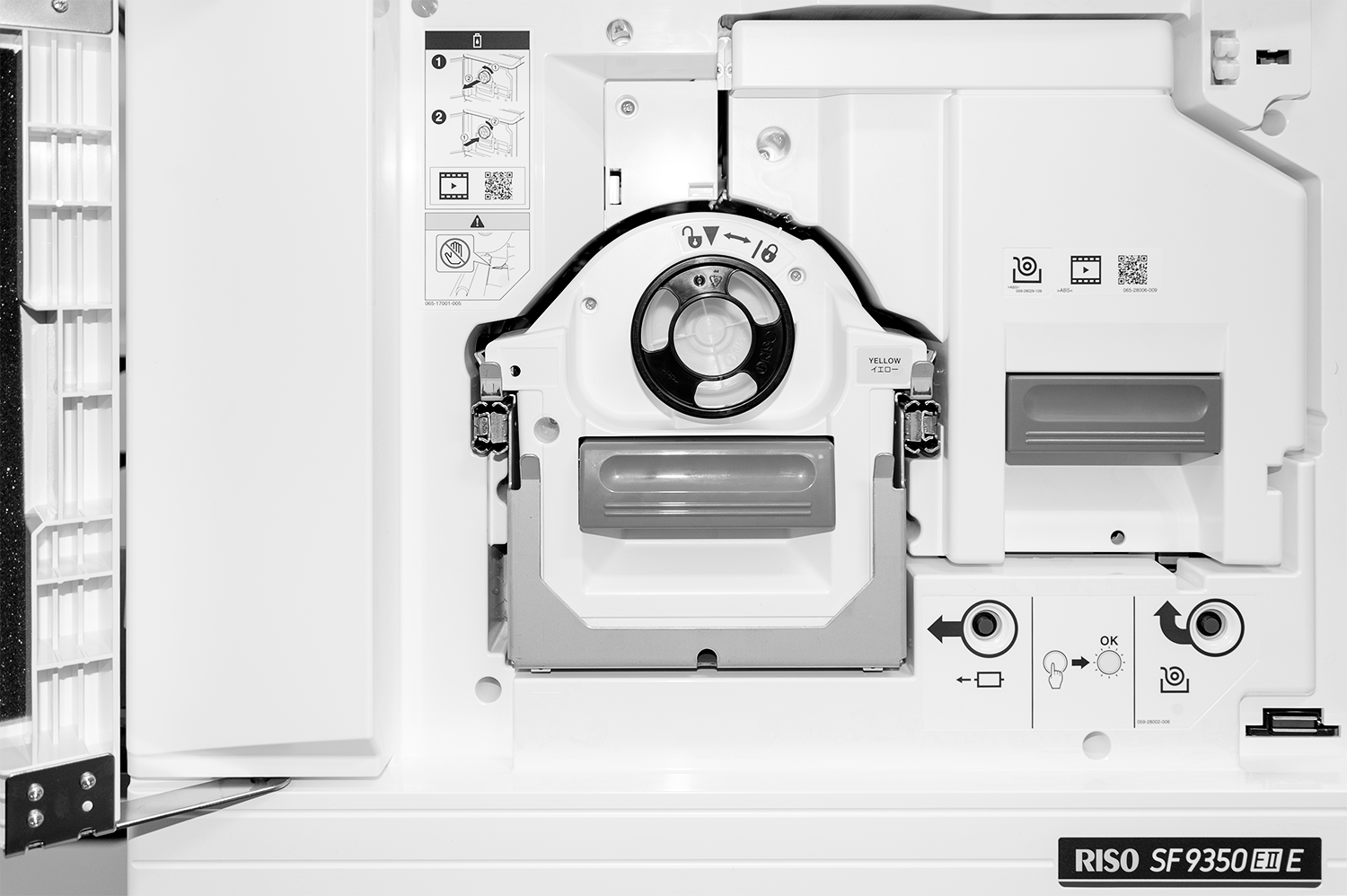
The Risograph printing technique is a process that combines the efficiency of semi-industrial production, the uniqueness of handcrafted processing, and the brightness of special soy-based inks. We print with a duplicator Risograph SF9350 EII, which supports a maximum format of A3. We have 9 different colors available and various types of handmade paper.
Funzionamento
Risograph printers are digital stencil duplicators — developed by the Japanese company Riso Kagaku Corporation — that combine features of mimeograph printing, screen printing, and traditional office photocopiers. Thanks to this unique configuration, these machines are capable of producing high print runs quickly and efficiently, while maintaining compact sizes, low energy consumption, and a minimal environmental impact.
The operation of this technology is based on a flat-color printing technique: for each color printed, it is necessary to create a new stencil and insert the corresponding drum for the desired ink, predicting and adjusting the correct overlap between the different layers and colors. The Risograph thus combines high production efficiency with an approach that retains a strong physical and artisanal character.


Colors
- blackブラック Hex: 000000
- redレッド Hex: FF665E
- greenグリーン Hex: 00A95C
- yellowイエロー Hex: FFE800
- blueブルー Hex: 0078BF
- purpleパープル Hex: 765BA7
- aquaアクア Hex: 5EC8E5
- fluo pink蛍光ピンク Hex: FF48B0
- flat goldフラットゴールド Hex: bb8b41
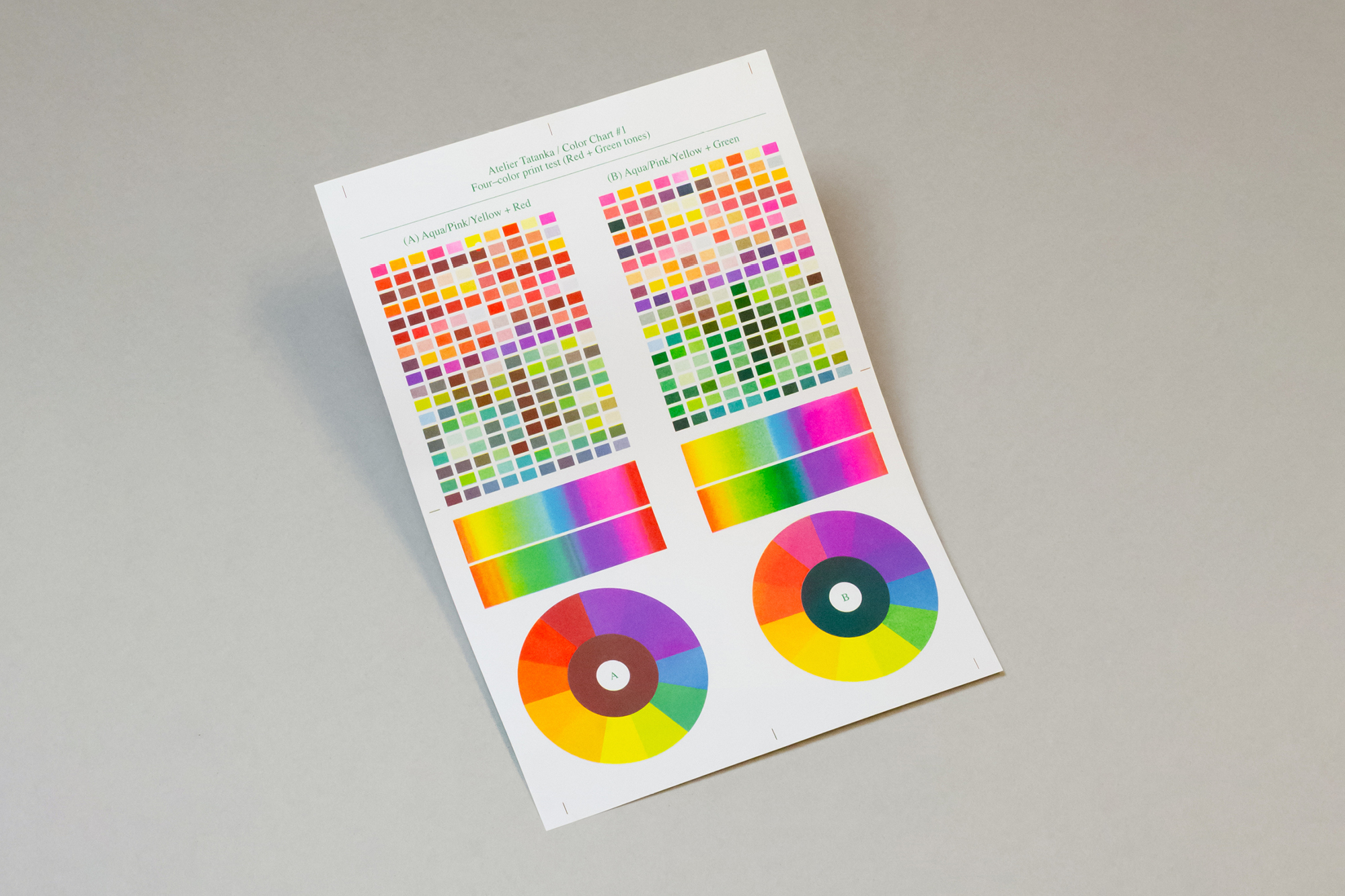
In Risograph printing, color is a central element of both the aesthetics and the functioning of the machine: printing with this technique means using vibrant, pure inks that have a unique chromatic output and specific paper transfer properties. Our studio has 9 different inks available, which can be used in monochrome prints or — similar to screen printing — in overlapping layers, creating new shades and color variations.
These inks are oil-based emulsions, made from an extract of rice bran, a byproduct of food processing: their unique composition makes them more eco-friendly and gives them remarkable brightness and chromatic vividness.
Unlike other printing technologies, color is not achieved by mixing pigments inside the machine: each color corresponds to a specific ink, which is contained in pure form within a dedicated printing drum and must be transferred to the paper in separate and independent passes.
An error has occurred